The Making of Mechaya
As a small, family-owned winery, every wine we release carries a mixture of anticipation, excitement, and hope. We produce each bottle with tremendous care through a hands-on process that begins the moment grapes are picked from the vine or honey is harvested from the hive.
We spend nearly every day tasting, evaluating, and analyzing our wines and honey wines. Once fermentation begins in the cellar, there is always an element of uncertainty. You can do everything right, only for a tiny microorganism to take over and create unexpected challenges. We monitor each fermentation daily, tracking its progress and observing how its flavors develop. We do everything we can to protect the fermentation so the finished wine beautifully reflects our original intention.
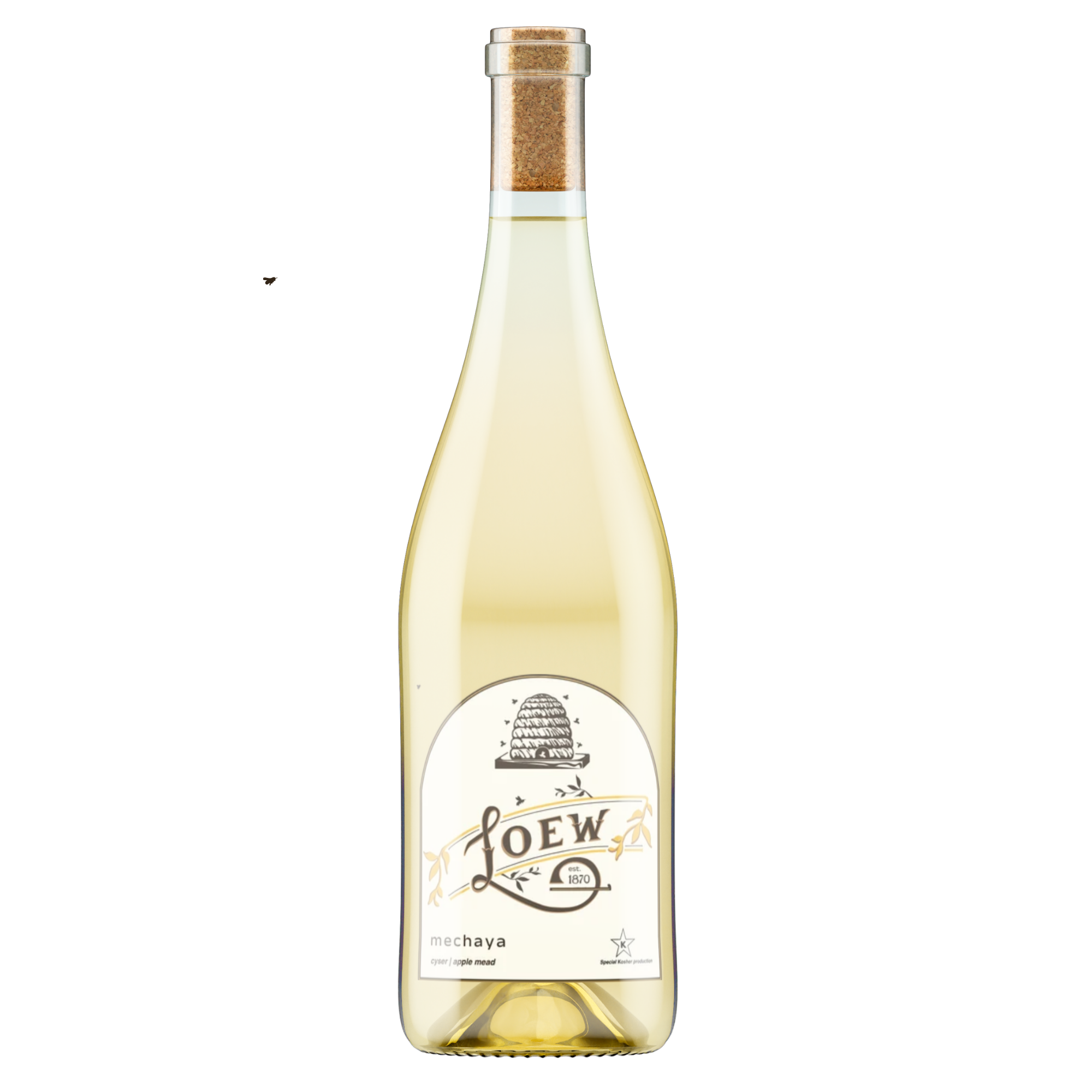
Mechaya was an especially thoughtful undertaking. It is the first certified kosher honey wine produced and bottled at our family’s winery—and the first honey wine Sam and I made together. A blend of local apple cider and wildflower and clover honeys, it required months of planning. We had to coordinate everything from the timing of the apple pressing to transitioning the winery into “Star-K mode” and scheduling production with our Star-K rabbi.
Our goal was to have Mechaya ready for Rosh Hashanah, the Jewish New Year, when apples are traditionally dipped in honey to welcome a sweet year ahead.
The fermentation progressed beautifully, creating a honey wine that is surprisingly reminiscent of Sauvignon Blanc, despite containing no grapes.
Arguably, creating the label was even more challenging than producing the honey wine itself. To distinguish our kosher honey wines from the rest of our portfolio, we needed to develop a new label—one that felt like a sister to our existing line while having an identity of its own.
After much family deliberation, my cousin Eliana stepped in. She is a plant biologist pursuing a PhD in Ecology and Evolutionary Biology, as well as a gifted artist. Together, we set out to bring our family’s original label from 1870 back to life with a subtle, modern twist.
Eliana spent weeks meticulously tracing the lettering from the historic label to create the typeface used on the new design. She also devoted countless hours to modernizing its image of a skep, a traditional beehive. I loved working alongside her, offering practical insight while watching her transform pieces of our family’s history into something new.
The shape of the label honors the arched red door that welcomes guests to our tasting room. The custom door was created by a friend of my grandparents more than 30 years ago. The remaining details were carefully pieced together, retraced, and adapted from the 1870 honey wine label belonging to my great-great-grandmother, Malka. She began our family’s honey wine legacy—a tradition that has now reached its fifth generation.
When you drink Mechaya, especially in the company of loved ones, you are participating in a tradition once shared by Jewish communities in Poland throughout the 19th and early 20th centuries—a tradition disrupted by the Holocaust.
With every bottle, you are preserving memory, sharing memory, and becoming part of that memory. Our family cannot fully express how heartwarming it is to know that our history is being carried forward, one sip at a time, by all of you.
L’Shana Tova—may you have a sweet new year filled with joy, tradition, and plenty of honey wine.